

Shady corners of the garden often get a bad rap. Many gardeners think shade limits their options, but that’s not true. With the right shade-loving perennials you can turn these low-light areas into one of the most magical parts of your garden.
In this guide, we’ll explore
- Different types of shade
- Why perennials are ideal for shade gardens
- Top perennial picks for each type of shade
Ready? Let’s dig!
Understanding the Types of Shade
Understanding the type of shade in your garden is vital for plant selection. Not all shade is equal, and it affects how plants grow. Recognizing the nuances helps you pick the best perennials for shade.
- Full Shade (0-4 hours of direct sun): These areas receive very little direct sunlight and are typically found on the north side of structures or under dense tree canopies. Plants in full shade receive primarily indirect or filtered light throughout the day.
- Partial Shade (4-6 hours of direct sun): Sometimes called part sun/part shade, these transitional areas receive either morning sun with afternoon shade or receive bright but indirect sun for much of the day.
Why Choose Perennials for Shade?
Perennials are a fantastic choice for shady garden areas because once established, perennials come back year after year, saving you the trouble of needing to replant every season. Many shade perennials are native woodland or forest-edge plants that evolved to thrive in lower light and cooler soils. They also tend to be low maintenance, demanding less frequent watering than their sun-loving counterparts. Shade perennials also often have beautiful foliage and textured growth habits, adding interest to the garden.
What Are the Best Perennials for Full Shade?
Hostas
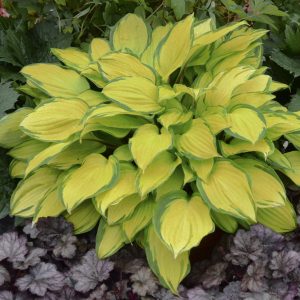
Hostas are the undisputed champions of the shade garden. With hundreds of varieties available, they offer incredible diversity in size, color, and texture. ‘Island Breeze‘ features striking variegation with grass-green margins and bright yellow centers that turn chartreuse with more light. For larger impact, SHADOWLAND ‘Coast to Coast’ spreads up to 36 inches with heavily puckered golden-green foliage that becomes more vibrant as summer progresses. Both varieties bloom in midsummer with lavender flowers that attract hummingbirds and are hardy in zones 3-9.
Growing Tips: Plant hostas where they’ll receive a few hours of cool morning sun if possible. Water during drought periods (they need at least 1 inch per week). Deer love hostas, so use repellent if necessary.
Hellebores (Lenten Rose)
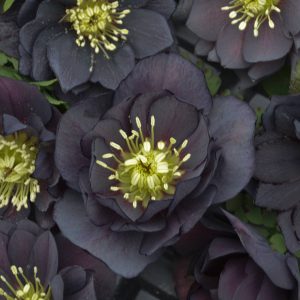
If you crave early season color, hellebores are unbeatable. These shade warriors bloom in late winter to early spring when little else is flowering. The WEDDING PARTY series offers stunning double blooms like ‘Dark and Handsome‘ with deep black flowers touched with purple, or ‘Wedding Bells‘ with crisp white blooms. For single flowers, try the HONEYMOON series such as ‘Paris in Pink‘ with medium to dark pink petals or ‘Spanish Flare‘ featuring lemon yellow blooms with burgundy red accents. All bloom for up to 6 weeks and remain attractive long after, with semi-evergreen foliage providing year-round interest. Hardy in zones 4-9, they’re deer and rabbit resistant.
Growing Tips: Plant in damp to moist, well-drained soil rich in organic matter. They prefer consistent moisture but will tolerate some drought once established.
Ferns
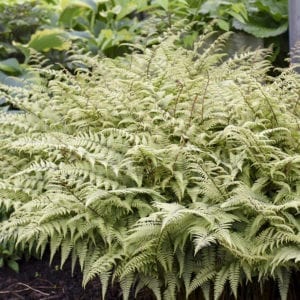
For elegant texture and a classic woodland feel, ferns are essential. Athyrium ‘Ghost‘ offers striking silvery foliage inherited from Japanese Painted Fern parents, reaching up to 3 feet tall with better drought tolerance than most ferns. ‘Crested Surf‘ features unique double-crested frond tips with silver-gray foliage and dark burgundy stems on new growth. For dramatic color, ‘Lady in Red’ showcases dark green fronds atop rich burgundy stems. All are hardy in zones 3-8 and make excellent companions for hostas and heuchera.
Growing Tips: Keep soil consistently moist and rich in organic matter. Ferns appreciate humidity, so they’re perfect for those naturally damp shaded areas.
Heartleaf Brunnera (Siberian Bugloss)
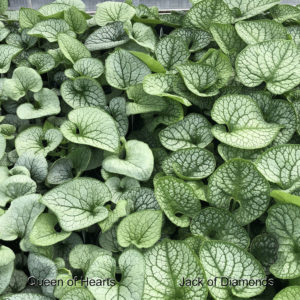
Often called “False Forget-Me-Not,” brunnera brings both flower and foliage interest to shade gardens. ‘Queen of Hearts’ features stunning bi-colored foliage with green leaves overlaid in silver that beautifully defines the veins. In spring, tiny periwinkle-blue blooms appear, brightening shady spots considerably. Another excellent choice is ‘Jack of Diamonds’ with its distinctive heart-shaped leaves. Both varieties form attractive mounds that provide season-long interest and are deer and rabbit resistant.
Growing Tips: Brunnera thrives in moist, well-drained soil and can tolerate some morning sun. Deadhead spent flowers to keep plants looking tidy.
Astilbe (False Spirea)
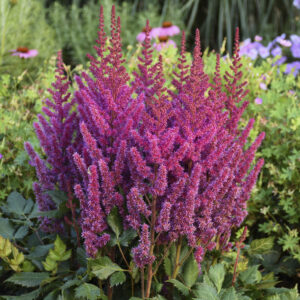
For mid to late summer color in the shade, astilbe delivers with its feathery plume-like flowers. ‘Visions’ is particularly versatile, being part of the Chinensis family that can handle full sun to full shade locations. This compact variety (14-16 inches tall) produces sweetly scented raspberry pink blooms atop bright green, serrated foliage. More drought-tolerant than other astilbes, it’s deer and rabbit resistant and perfect for borders, woodland gardens, or mass plantings. Hardy in zones 4-9.
Growing Tips: Astilbe performs best in moderate to moist soil conditions. Mulch to retain moisture and provide afternoon shade in warmer climates.
What Are the Best Perennials for Partial Shade and Part Sun?
Heuchera (Coral Bells)
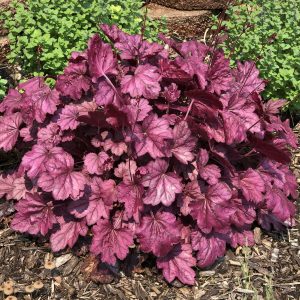
Coral bells are shade garden superstars, grown primarily for their spectacular foliage that comes in an astounding array of colors. The DOLCE® series offers year-round interest with varieties like ‘Apple Twist’ featuring mahogany new growth with yellow edges that ages to bright green with silver overlay. ‘Toffe Tart‘ displays amber leaves covered with a silver sheen. The DRESSED UP® series features large, heavily ruffled leaves, such as ‘Wildberry’ in reddish purple or ‘Prom Dress’ in dark silver-purple. All produce delicate bell-shaped flowers in summer that attract hummingbirds and butterflies. Hardy in zones 4-9, they’re deer resistant and cold-hardy.
Growing Tips: Plant in well-drained soil with good air circulation. Some varieties develop better color with a bit of morning sun.
Bleeding Heart (Dicentra)
The old-fashioned charm of bleeding hearts is irreplaceable. For classic appeal, try ‘Gold Heart‘ with stunning golden foliage topped by chains of deep pink and white heart-shaped flowers on arching peach stems, or ‘Valentine‘ with large red dangling hearts. Both grow 2-3 feet tall and bloom in late spring, though the foliage may go dormant in summer heat. For continuous color, choose fern-leaved varieties like ‘Pink Diamonds’ or ‘White Diamonds’ that tolerate full sun and bloom from early summer into fall. All attract hummingbirds and are deer resistant, hardy in zones 3-9.
Growing Tips: Traditional bleeding hearts may go dormant in summer, so plant hostas or ferns nearby to fill in. Fern-leaved types prefer well-drained soil and can handle drier conditions.

Aruncus (Goat's Beard)
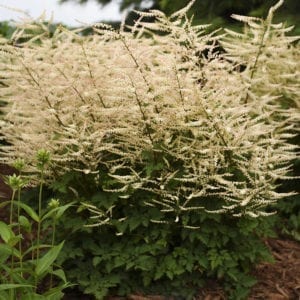
For a dramatic backdrop in partial shade, Aruncus ‘Chantilly Lace’ offers feathery, finely-cut foliage that provides season-long interest. In midsummer, creamy white flower spikes emerge, reaching 12-18 inches tall and creating an airy, elegant effect. This deer and rabbit resistant perennial forms substantial clumps over time and pairs beautifully with hostas and brunnera.
Growing Tips: Aruncus appreciates consistent moisture but is adaptable once established. It can handle more sun in cooler climates but benefits from afternoon shade in hot regions.
Japanese Painted Fern (Athyrium)
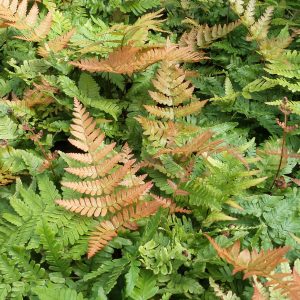
While we covered ferns in the full shade section, these deserve special mention for partial shade where their colors truly shine. Dryopteris ‘Brilliance’ (Autumn Fern) is particularly stunning, with newly emerging fronds in lustrous orange that glow against dark green mature fronds. In fall, bright red sori appear for added interest. Best leaf color develops in part sun, making it perfect for those transitional areas. Grows about 2 feet tall and wide in moist to wet, well-drained soil. Hardy in zones 5-9.
Growing Tips: Autumn ferns benefit from morning sun to develop their best color. Keep soil consistently moist and mulch well.
Shady areas are opportunities, not obstacles! With the wealth of beautiful shade-loving perennials available, you can create gardens that rival their sunny counterparts in color, texture, and seasonal interest. By understanding your specific shade conditions and selecting appropriate plants, you’ll enjoy years of beauty with minimal maintenance. Whether you’re dealing with full shade under mature trees, partial shade along a building’s east side, or dappled shade beneath an open canopy, there are perfect perennial solutions waiting to transform your space into a lush, thriving garden retreat.
Ready to find the perfect perennial for your shade space?